Table of Contents
In early January 2026, the United States launched a major military strike in Venezuela. The operation ended with the capture of President Nicolás Maduro and his wife by U.S. forces. This move has sparked global debate over its legality and its impact on world politics. Many leaders say it broke international law. Others defend the action.
The issue is now one of the biggest foreign policy debates in the world. In the UK, senior politicians are asking if the U.S. has the right to take military action without approval from international bodies or even its own Congress. Many legal experts have weighed in. The consequences could shape global norms for years.
This article explains the event, the law, global reactions, political responses, and what comes next.
What Happened in Venezuela?
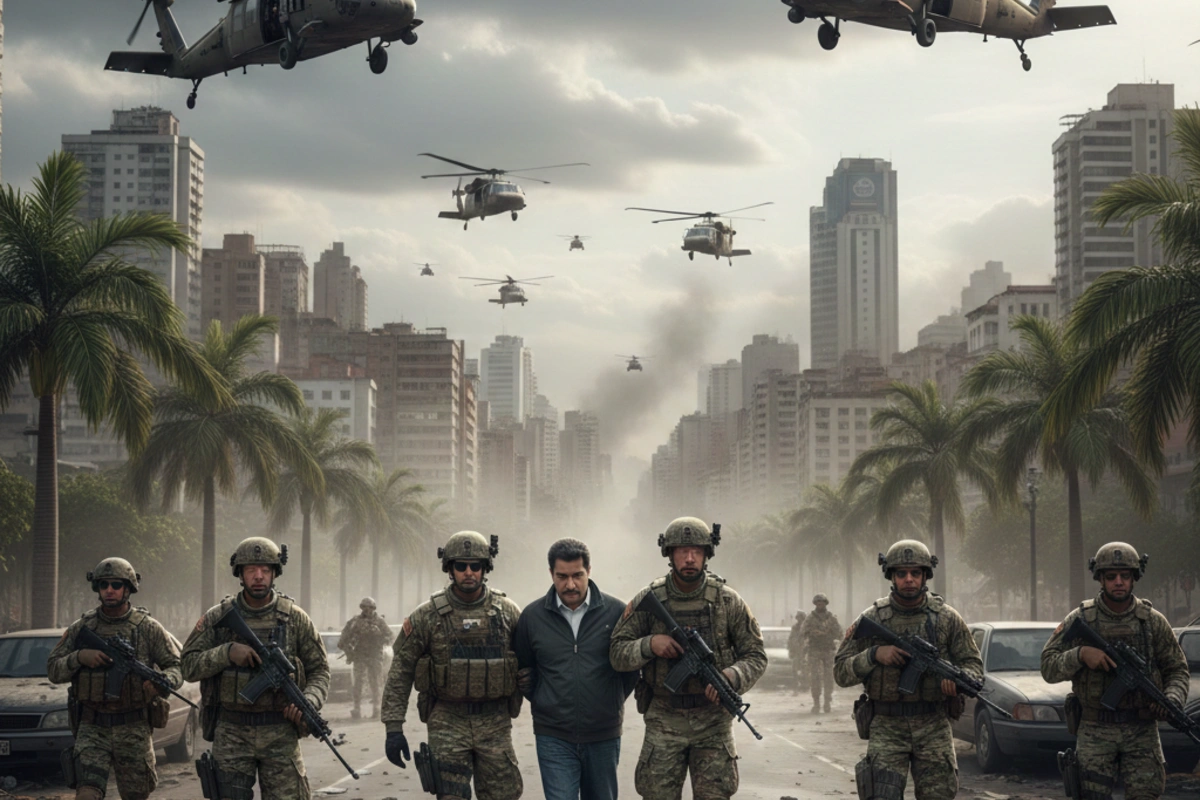
In the first weekend of January 2026, the U.S. military carried out strikes across Venezuela. The operation was described by President Donald Trump as a mission against drug trafficking and narco-terrorism.
U.S. forces reportedly captured Venezuelan President Nicolás Maduro and his wife and brought them to the United States. The U.S. government claims the capture was necessary to enforce drug laws and protect national security.
Venezuelan authorities say the attack caused power outages and civilian deaths in Caracas. Local infrastructure was damaged, and fear spread among residents during the operation.
Why the Operation Is Controversial
Sovereignty and Use of Force
Most countries agree that military strikes on another nation are not allowed unless:
- The attacked country agrees
- The action is for self-defense
- The UN Security Council approves it
None of these conditions clearly applied to the Venezuela strike. Legal experts say international law bans one nation from using force inside another without clear legal grounds.
Self-Defense Argument
The U.S. government hinted that it acted in self-defense against drug violence. Many experts reject this claim. They argue drug trafficking is a criminal issue, not a military attack. Under international law, crime does not justify bombing another country.
International Law and the UN Charter
At the center of the debate is Article 2(4) of the United Nations Charter. This rule says countries must avoid using force against another state’s territory or political system.
Without UN Security Council approval or a real armed attack, military action is seen as illegal. Legal scholars say the capture of a sitting president through force breaks this rule.
Some experts describe the strike as a possible act of aggression. This is one of the most serious violations under international law.
Global Reactions to the Strike
United Nations Response
The United Nations raised concerns soon after the strikes. Several member states criticized the action during emergency discussions. The UN leadership warned that such actions weaken global rules meant to prevent conflict.
Russia and China
Russia and China strongly condemned the strike. Both called it unlawful and dangerous. Russian leaders said it showed disrespect for global rules. China expressed concern about regional stability and warned against ignoring sovereignty.
European Union
European leaders urged calm and respect for international law. They stressed that the crisis in Venezuela should be handled through diplomacy, not force.
Latin American Response
Many Latin American countries criticized the action. Leaders from the region said the strikes violated the UN Charter and threatened regional peace.
UK Political Debate
The issue also caused strong reactions in the United Kingdom.
Emily Thornberry’s Statement
Dame Emily Thornberry, chair of the Foreign Affairs Committee, said the U.S. strikes were not legal. She urged the UK government to clearly say the action was unacceptable.
She warned that allowing such actions could encourage powerful countries to act without limits. She said this could embolden Russia and China to justify future attacks.
UK Government Position
The UK government has avoided calling the action illegal. Officials say the U.S. must explain its legal reasoning. The Prime Minister confirmed the UK was not involved in the operation.
Pressure in Parliament
Some UK lawmakers are unhappy with the government’s silence. They argue that allies should speak out when international law is broken, even if the country involved is a close partner.
Key Legal Questions
Several important legal questions remain open.
Can the U.S. arrest a sitting foreign president?
Most experts say no. Heads of state usually have immunity. This protection exists to prevent political arrests by force.
Was the action self-defense?
Legal scholars say no. Drug trafficking does not count as an armed attack under international law.
Did U.S. law allow the strike?
Some critics say the U.S. Constitution requires approval from Congress for major military actions. That approval was not clearly given.
Impact on the Global Order
Risky Precedent
Experts warn this action could set a dangerous example. If one powerful country ignores the rules, others may follow. This could weaken global peace systems.
Threat to International Law
International law relies on trust and cooperation. When strong nations ignore it, weaker nations suffer. Many fear the world could move toward chaos if rules no longer matter.
Table: Key Terms and Their Meaning
| Term | Meaning | Why It Matters |
|---|---|---|
| Sovereignty | A country’s right to govern itself | Central issue in the Venezuela strike |
| International Law | Rules that guide state behavior | Many say these rules were broken |
| UN Charter Article 2(4) | Bans force without approval | Main legal rule cited by critics |
| Self-Defense | Response to an armed attack | U.S. claim is widely disputed |
| UN Security Council | Body that approves force | No approval was given |
Public Reaction
Public opinion is divided.
Some people support the action because they see Maduro as a criminal leader. Others believe legality matters more than political goals.
Protests have taken place in several countries. Activists argue the strike harms global stability and trust.
What Happens Next?
Maduro’s Trial
Maduro and his wife are expected to face charges in U.S. courts. His lawyers may argue he has immunity. The case could take years.
Diplomatic Fallout
More debate is expected at the United Nations. Countries may push for investigations or formal condemnations.
Long-Term Effects
This event may shape future military actions worldwide. If unchallenged, it could weaken rules that prevent global conflict.
Conclusion
The U.S. military action in Venezuela has triggered one of the most serious legal and political debates of 2026. Many leaders and experts believe the strike violated international law. Others argue it was necessary for security.
The case raises hard questions about power, law, and global order. How the world responds may decide the future strength of international rules.