Table of Contents
The United States has declared it will dictate Venezuela’s decisions and control the country’s oil sales indefinitely. This announcement follows the capture of President Nicolás Maduro and his wife by US special forces. The move has escalated tensions in the region and drawn international attention.
US President Donald Trump’s administration is asserting authority over Venezuela’s interim leaders. The US plans to control oil production and sales, manage political decisions, and influence the economic direction of the country. This blog explains the situation in detail, covering political, economic, and international dimensions.
Background: US Intervention in Venezuela
Venezuela, with the largest proven oil reserves in the world, has been a focal point for US foreign policy. Nicolás Maduro, Venezuela’s elected leader, was captured in a US raid. His interim government, led by Delcy Rodríguez, claims no foreign power governs Caracas.
Trump’s administration claims maximum leverage over Venezuela’s interim authorities. US officials have stressed that decisions in Caracas will continue to be guided by Washington.
The operation has sparked controversy. Venezuelan officials reported at least 100 people killed and a similar number injured. Among those killed were 32 Cuban military personnel, who previously served as bodyguards for Maduro and his predecessors.
US Strategy in Venezuela
The US plan is divided into several phases:
- Immediate Control Over Oil Sales:
Washington intends to control the sale of Venezuela’s oil indefinitely. Between 30 and 50 million barrels of crude will initially be transferred to the US. Profits from these sales will fund purchases of American-made products such as machinery, agricultural goods, and medical devices. - Economic Recovery and Western Investment:
A later phase will allow US and Western companies to access the Venezuelan market. The goal is to rebuild infrastructure and create a process of national reconciliation within Venezuela. - Political Oversight:
The US intends to guide the interim authorities in all major decisions. White House Press Secretary Karoline Leavitt emphasized that Washington will continue close coordination with Venezuela’s interim leaders. - Naval Blockade and Military Threats:
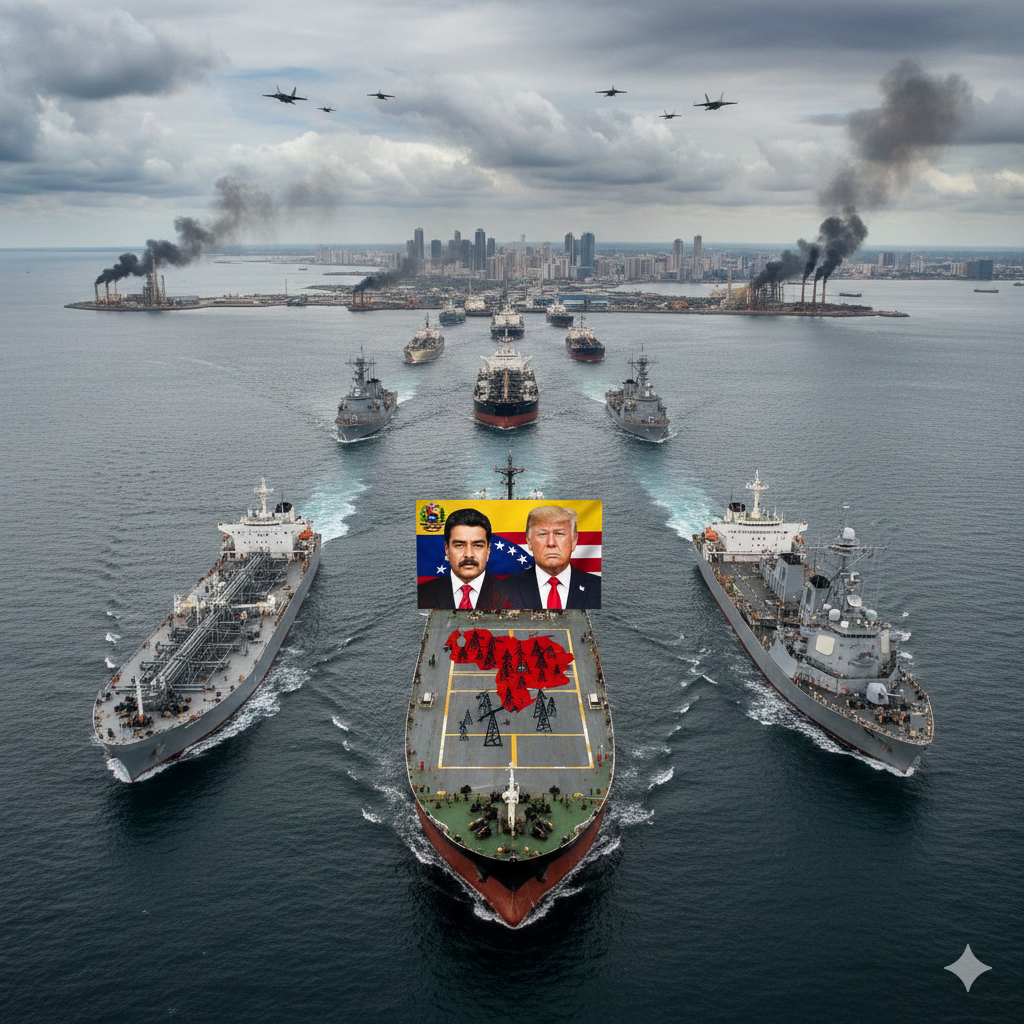
Although no boots are on the ground, the US is relying on a naval blockade and the implied threat of force to ensure compliance with its directives.
Venezuela’s Response
Venezuelan authorities strongly oppose US intervention. Delcy Rodríguez stated that no foreign power governs Caracas and condemned the US attack as unprecedented in history.
Interior Minister Diosdado Cabello reported significant casualties, including at least 100 deaths and similar numbers injured. Maduro and his wife, however, appeared in court in New York under their own power, indicating they survived the raid physically intact.
International Reaction
The US action has sparked reactions across the globe:
- Cuba: Reported the deaths of 32 military personnel involved in Maduro’s protection.
- Russia: Condemned the seizure of Russian-linked oil tankers by the US Navy.
- Colombia: President Gustavo Petro was invited to meet with Trump at the White House following a first phone call.
International observers express concern about sovereignty, legality, and long-term regional stability.
Oil Control and Economic Implications
Venezuela’s economy heavily relies on oil exports. The US intends to monopolize sales and profits from Venezuelan oil:
- Crude will first include backed-up stored reserves, then ongoing production.
- US oil companies have been invited to invest in Venezuela’s crumbling oil infrastructure.
- Revenue will fund imports of US goods, tying Venezuela’s economy to the United States.
Energy Secretary Chris Wright stated the US aims to market Venezuelan crude indefinitely. This control would allow Washington to influence global oil markets and regional economics.
Table: Key Points on US-Venezuela Situation
| Aspect | Details | Potential Impact |
|---|---|---|
| Political Control | US dictates decisions to interim leaders | Limits sovereignty, guides governance |
| Oil Sales | 30–50 million barrels initially, indefinite control | Economic dependency, profits to US |
| US Strategy | Naval blockade, threat of force | Ensures compliance without boots on ground |
| Interim Government | Led by Delcy Rodríguez | Supported and monitored by US |
| Casualties | At least 100 killed, 100+ injured | Humanitarian concern, regional tension |
| International Response | Cuba, Russia, Colombia | Diplomatic friction, regional unease |
| US Corporate Involvement | Meetings with oil companies | Potential investments in infrastructure |
Legal and Ethical Considerations
The US asserts the Donroe Doctrine, claiming authority over its “backyard.” Critics argue this undermines Venezuela’s sovereignty and violates international law.
Questions raised include:
- Is indefinite control over oil exports legal under international law?
- How does military intervention without consent impact human rights?
- What precedent does this set for future US interventions in Latin America?
Secretary of State Marco Rubio stated that the US is “not just winging it” and emphasizes structured post-Maduro planning. Nonetheless, global criticism persists.
Impact on Venezuelan Citizens
Venezuelans face uncertainty under US directives:
- Access to oil profits and resources may shift from domestic to foreign priorities.
- Political instability may continue despite interim authority.
- Civil unrest could grow if citizens perceive foreign control as illegitimate.
- Basic services like energy, healthcare, and food supply may be affected by economic redirection.
Humanitarian concerns are high, especially for those in vulnerable populations. NGOs and international agencies are monitoring the situation.
Regional Security and Latin America
US actions in Venezuela impact the wider region:
- Colombia: Strengthened political ties with the US; invited for White House discussions.
- Brazil and other neighbors: Monitoring economic and security effects.
- Cuba and Russia: Criticize intervention and loss of military personnel.
The balance of power in Latin America may shift, creating tensions between nations and influencing trade, oil prices, and migration patterns.
Oil Markets and Global Energy Supply
Venezuelan oil control has worldwide implications:
- Crude supply from Venezuela is substantial; US control could influence global prices.
- Restrictions on international oil companies may alter existing contracts.
- Energy markets may see volatility as political and economic uncertainty grows.
Venezuela’s existing commercial framework is being adjusted under US guidance, raising questions about long-term market stability.
Humanitarian and Civil Consequences
The raid and subsequent US control have sparked concerns about:
- Casualty counts, including military and civilian deaths
- Injuries among Maduro’s family and government officials
- Displacement of communities near strategic locations
- Psychological impact on citizens witnessing foreign military operations
Efforts to provide medical assistance and humanitarian aid may be complicated by ongoing political control.
Future Outlook
The situation in Venezuela remains fluid:
- US directives may continue indefinitely.
- Oil infrastructure may see foreign investment.
- Political reconciliation is uncertain.
- Regional powers will closely monitor US moves.
The global community is watching closely, particularly Latin American neighbors and oil-importing nations.
Conclusion
The US assertion over Venezuela marks a significant shift in regional geopolitics. Control over oil and political decisions demonstrates the US’s influence, while raising legal, ethical, and humanitarian concerns.
Venezuelans face uncertain futures, and the international community is balancing diplomacy and criticism. The coming weeks will be critical in defining the country’s political and economic landscape.