Table of Contents
The United Kingdom has reached a major milestone in healthcare. The National Health Service has delivered a new cancer treatment to its first patient. This marks a major step forward in how serious cancers are treated in the UK.
The treatment is known as CAR-T therapy. It uses a patient’s own immune system to fight cancer. Doctors and patients see it as a sign of hope for cases where other treatments failed.
This article explains what happened, how the treatment works, and why it matters to the public.
NHS Treats First Patient With Advanced Cancer Therapy
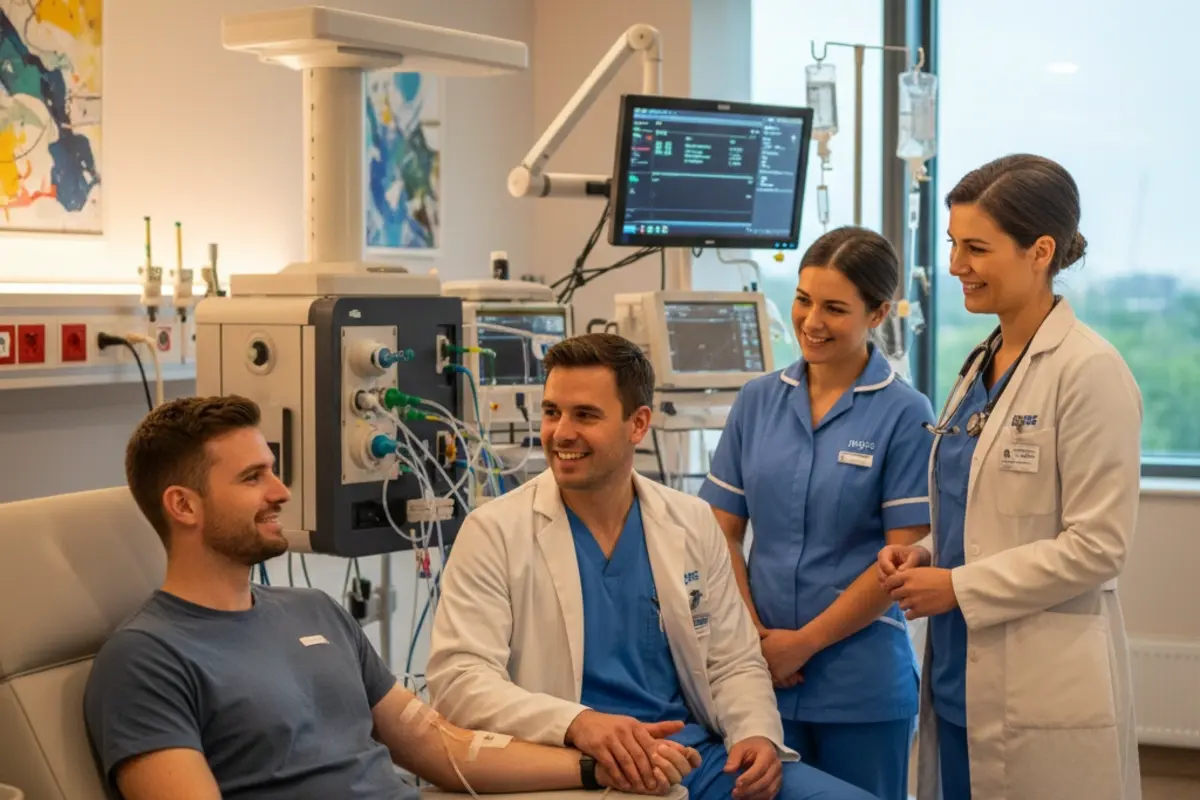
In early 2026, the NHS treated its first patient using a new immune-based cancer therapy. The patient had an aggressive blood cancer that returned after standard treatment.
Doctors used the patient’s own immune cells to target and destroy cancer cells. This was done inside an NHS hospital and funded fully by public healthcare.
This moment shows progress in cancer care across the UK.
What Is CAR-T Therapy? Simple Explanation
CAR-T therapy is a type of immune treatment. It helps the body fight cancer more directly.
Here is how it works:
- Doctors take immune cells from the patient’s blood
- These cells are changed in a lab
- The cells learn how to find cancer
- The cells are returned to the patient
- The immune system attacks cancer cells
This approach is different from chemotherapy. It targets cancer with more accuracy.
Why This Treatment Matters for UK Patients
This therapy is important for several reasons.
Public Access Through the NHS
The NHS covered the full cost of treatment. Patients do not need private care to receive it. This keeps healthcare fair and open to everyone.
Higher Chance of Recovery
Early results show strong remission rates. Many patients live longer and feel better after treatment.
New Option for Hard Cases
This therapy helps patients whose cancer returns after other treatments fail. For many, it offers a final chance.
Patient Experience and Public Hope
The first patient described the treatment as surprising but hopeful. A small number of immune cells had a strong effect inside the body.
For families affected by cancer, this news brings real hope. It shows progress where options were once limited.
How This Changes Cancer Treatment in the UK
This therapy marks a shift in medical care.
- Cancer treatment becomes more targeted
- Fewer healthy cells are damaged
- Side effects may be lower
- Survival chances improve
Doctors believe immune-based care will play a bigger role in future treatments.
Medical Experts Share Their View
Health experts say this is not just one success. They see it as a path toward future therapies.
Researchers are studying how this method could treat other cancers. Blood cancers are the first focus, but solid tumors may follow.
Step-by-Step Process of CAR-T Therapy
The treatment follows a clear process:
- Blood sample collection
- Immune cell separation
- Lab modification
- Cell infusion
- Patient monitoring
The process takes weeks but offers long-term benefit.
Cost and NHS Planning
CAR-T therapy is expensive. Still, the NHS chose to fund it for eligible patients.
Health leaders believe better outcomes will reduce long hospital stays. This may lower long-term healthcare costs.
Public Reaction Across the UK
Patients, charities, and doctors welcomed the news. Many praised the NHS for adopting advanced treatment early.
Public trust grows when healthcare systems invest in innovation.
What Comes Next for UK Cancer Care
The NHS plans to:
- Expand treatment centers
- Train specialist teams
- Study long-term results
- Increase patient access
More people may receive this therapy in the coming years.
Risks and Safety Measures
CAR-T therapy is powerful and must be monitored closely.
Possible side effects include:
- Fever
- Blood pressure changes
- Immune reactions
Doctors manage these risks with careful monitoring and support.
Comparison of Cancer Treatment Options
| Treatment Type | How It Works | Best Use | Common Effects |
|---|---|---|---|
| Chemotherapy | Kills fast-growing cells | Many cancers | Hair loss, fatigue |
| Radiotherapy | Uses radiation | Local tumors | Skin irritation |
| CAR-T Therapy | Uses immune cells | Blood cancers | Fever, immune response |
| Immunotherapy | Boosts immunity | Several cancers | Fatigue, rash |
This table helps explain where CAR-T fits in modern care.
Wider Health Trends in the UK
This breakthrough reflects wider progress:
- Faster approval of new treatments
- Better cancer research funding
- Strong focus on patient outcomes
- Continued trust in public healthcare
Health innovation remains a key national priority.
Why This News Matters to Everyone
This story affects:
- Cancer patients
- Families and caregivers
- Medical professionals
- Public healthcare policy
It shows that advanced treatment is possible within the NHS.
Key Takeaways
- CAR-T therapy uses immune cells
- NHS funded the first treatment
- It helps serious cancer cases
- More patients may benefit soon
This is progress, not a cure, but it offers hope.