Table of Contents
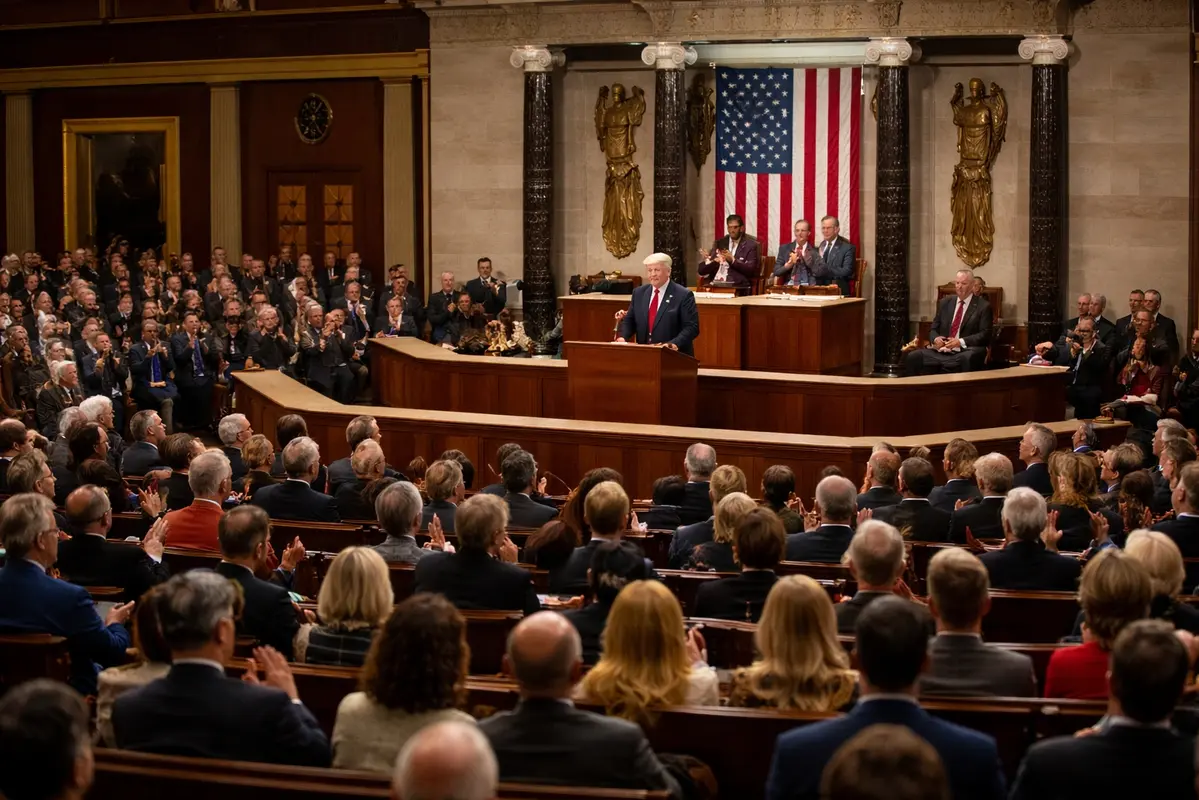
The latest State of the Union speech by US President Donald Trump has drawn global attention. The address lasted nearly one hour and fifty minutes, making it the longest in modern US history.
Trump used the speech to praise his economic record, defend his tariff policy, and send a strong message to Iran. The event also featured emotional award moments, heated political exchanges, and visible divisions between Republicans and Democrats.
This article breaks down the key points from the speech, reactions from political leaders, and what it means for the United States and global politics.
A Historic and Lengthy Address
Trump’s speech lasted around one hour and forty-seven minutes. This made it the longest State of the Union speech on record. The address mixed policy claims, patriotic moments, and political attacks.
Supporters described the speech as energetic and optimistic. Critics argued that it lacked real solutions for major national problems.
The long duration itself became a talking point. House Speaker Mike Johnson said the speech could have gone even longer due to what he called “good news” for Americans.
Trump’s Economic Message: A “Turnaround for the Ages”
A major focus of the speech was the economy. Trump claimed that the US economy is “roaring like never before.” He said inflation is at its lowest level in over five years and highlighted investment growth.
Trump framed his first year back in office as a turning point. He told lawmakers that his policies had created jobs and boosted business confidence.
However, fact checks from journalists questioned some of these claims. Analysts pointed out mixed economic data and ongoing public concern about living costs.
Polls suggest many Americans still feel unhappy with the state of the economy. This gap between official claims and public sentiment remains a key political issue.
Tariffs and Trade: Clash With the Supreme Court
Trade policy was another major theme. Trump criticised the Supreme Court’s ruling against several of his global tariffs. He called the decision disappointing and unfortunate.
Despite the ruling, Trump said new 10% tariffs would stay in place through other legal routes. This shows his continued belief in tariffs as a tool to protect American industries.
The tariff dispute reflects broader tension between the executive branch and the judiciary. It also raises questions about future trade relations with key partners.
Immigration and Border Security Claims
Trump also spoke about immigration. He said the US now has the strongest border security in its history. He praised efforts to reduce illegal crossings and strengthen enforcement.
Critics argue that immigration policy remains deeply divisive. Some Democrats say enforcement actions have caused humanitarian concerns and legal disputes.
The speech avoided detailed discussion of controversial raids or protests linked to immigration. This omission drew criticism from opposition leaders.
Iran Warning: Diplomacy First but Firm Red Line
Foreign policy took centre stage when Trump addressed Iran. He said he prefers to resolve tensions through diplomacy. Yet he warned that the US would never allow Iran to develop nuclear weapons.
This message combined openness to talks with a clear threat. It reflects long-standing US policy toward Iran’s nuclear programme.
The warning comes at a time of ongoing regional tension. Observers see Trump’s statement as a signal of strong US resolve while keeping the door open for negotiation.
Venezuela and Military Operations
Trump praised a recent US special forces operation that led to the capture of Venezuelan leader Nicolás Maduro. He described the mission as ending the rule of an “outlaw dictator.”
The claim drew mixed reactions internationally. Supporters viewed the operation as a demonstration of US strength. Critics questioned the legal and diplomatic implications.
This part of the speech showed Trump’s focus on projecting military power and leadership abroad.
Awards and Emotional Moments in the Chamber
The speech included several award presentations honouring American heroes. These moments added a human and emotional tone.
Royce Williams, a 100-year-old Korean War fighter pilot, received the Congressional Medal of Honor. Scott Ruskan, a Coast Guard rescue swimmer, received the Legion of Merit for saving lives during floods.
Andrew Wolfe and the family of Sarah Beckstrom received Purple Hearts. Helicopter pilot Eric Slover and hockey star Connor Hellebuyck were also recognised.
These tributes drew applause across party lines and created moments of unity.
Patriotic Displays and Public Reactions
Patriotism was a strong theme during the speech. The US men’s Olympic hockey team received a warm welcome. The chamber erupted in chants of “USA, USA” several times.
Supporters said the speech celebrated national pride and achievement. Critics argued that patriotic displays sometimes overshadowed policy discussion.
The event highlighted how political speeches often mix policy with symbolic moments.
Political Tensions and Disruptions
The speech was not without controversy. Texas Congressman Al Green was removed from the chamber after holding a protest sign. The sign referenced a deleted social media video involving former President Barack Obama.
Another moment of tension occurred when Democrat Ilhan Omar shouted that Trump was a liar during remarks about Minnesota. These disruptions showed the deep political divide in Washington.
Such scenes have become common during major political addresses in recent years.
Democratic Response and Criticism
Virginia Governor Abigail Spanberger delivered the Democratic response. She argued that Trump’s speech failed to offer real solutions to national challenges.
Democrats criticised the lack of detail on issues like healthcare, education, and inequality. They also questioned economic claims and foreign policy decisions.
This response reflects the broader political battle shaping US policy debates ahead of future elections.
Public Opinion and Polling Context
Polls suggest many Americans remain dissatisfied with the country’s direction. Economic concerns, political division, and foreign policy risks shape public sentiment.
Trump’s speech appeared aimed at boosting confidence and energising supporters. However, analysts say it offered little sign of a shift in approach that could win over critics.
The divide between political camps continues to define the US political climate.
Fact Checks and Media Analysis
Journalists and analysts examined Trump’s claims after the speech. Fact checks focused on inflation, job growth, and foreign policy achievements.
Some claims were supported by data, while others were disputed or lacked context. This reflects the role of independent verification in modern politics.
Media coverage also highlighted the speech’s political tone and record length.
Global Impact of the Speech
The State of the Union is closely watched around the world. Trump’s comments on Iran and Venezuela drew international attention. Trade remarks also matter for global markets.
Allies and rivals alike look to the speech for clues about US priorities. Strong rhetoric can influence diplomacy, investment, and security planning.
The global reaction shows the speech’s importance beyond domestic politics.
Economic Outlook After the Speech
Trump’s optimistic economic message contrasts with mixed economic indicators. Inflation has slowed, yet living costs remain a concern for many Americans.
Investment growth and job numbers remain central to economic debates. Analysts say future data will shape whether Trump’s narrative gains wider acceptance.
Economic performance often plays a key role in political success.
Foreign Policy Direction and Risks
Trump’s speech suggested a firm foreign policy stance. The Iran warning and Venezuela remarks indicate readiness to use pressure and power.
At the same time, his call for diplomacy with Iran shows a dual approach. Balancing strength and negotiation will shape future global relations.
Foreign policy remains a major test for any US administration.
The Role of Symbolism in the Speech
State of the Union speeches often mix policy with symbolism. Award presentations, guest recognition, and patriotic moments create emotional impact.
Trump’s speech followed this pattern. Honouring veterans and heroes reinforced themes of national pride and unity.
Symbolic elements can shape public perception as much as policy details.
Political Strategy Behind the Address
The speech also served a political purpose. It aimed to rally supporters, defend policy choices, and set the tone for upcoming debates.
Long speeches allow leaders to highlight achievements and frame narratives. Critics argue they can also avoid difficult questions.
Understanding the strategic aspect helps explain the speech’s structure and tone.
Media Coverage and Public Debate
Media outlets focused on different aspects of the speech. Some highlighted economic claims and foreign policy warnings. Others emphasised disruptions and political tensions.
Social media reactions were also intense. Supporters praised the speech’s confidence and patriotism. Critics questioned its accuracy and tone.
This varied coverage shows the fragmented nature of modern political discourse.
What Comes Next in US Politics
The speech sets the stage for future policy battles. Trade disputes, immigration reform, and foreign policy tensions will remain key issues.
Congressional debates and public opinion will shape how Trump’s agenda moves forward. The speech also signals priorities that may influence election campaigns.
The coming months will reveal whether the speech shifts political momentum.