Table of Contents
South Korea has faced one of its most serious political crises in decades. Former president Yoon Suk Yeol has been sentenced to life in prison for attempting to impose martial law. A Seoul court ruled that his actions amounted to an insurrection.
The decision has shocked the nation and drawn global attention. The ruling reflects deep political divisions and raises questions about democracy, power, and accountability in South Korea.
This article explains what happened, why the court delivered such a harsh verdict, and what it means for South Korea’s future.
Who Is Yoon Suk Yeol?
Yoon Suk Yeol rose to power as a conservative leader. Before politics, he worked as a prosecutor known for corruption investigations. His tough image helped him win the presidency in 2022.
His presidency soon faced political tension. The opposition controlled parliament, limiting his agenda. Public trust also dropped due to controversies involving his wife, Kim Keon Hee.
These pressures shaped the events that later led to his downfall.
The Martial Law Attempt That Shocked the Nation
On 3 December 2024, Yoon declared martial law during a live television broadcast. He said the move was needed to defend the country from “anti-state” forces linked to North Korea.
The order allowed military forces to take control of key institutions. Troops were deployed to seal off the National Assembly. Reports showed that politicians were targeted for arrest.
Lawmakers rushed to the assembly building despite military presence. They voted to overturn the order within hours. Yoon later withdrew martial law, but the damage was done.
The incident triggered political chaos and public outrage.
Court Ruling and Life Sentence
A Seoul court ruled that Yoon’s actions violated the constitution. Judges said he tried to subvert democratic institutions and seize power through military force.
Presiding judge Ji Gwi-yeon called Yoon the “insurrectionist leader.” The court said his decisions caused lasting harm to democracy and social unity.
Prosecutors had sought the death penalty. The court instead imposed life imprisonment. South Korea has not carried out executions since 1997, meaning death sentences often result in life imprisonment.
Yoon showed little emotion during sentencing. His lawyers rejected the ruling and claimed the verdict lacked evidence.
Public Reaction: A Deeply Divided Nation
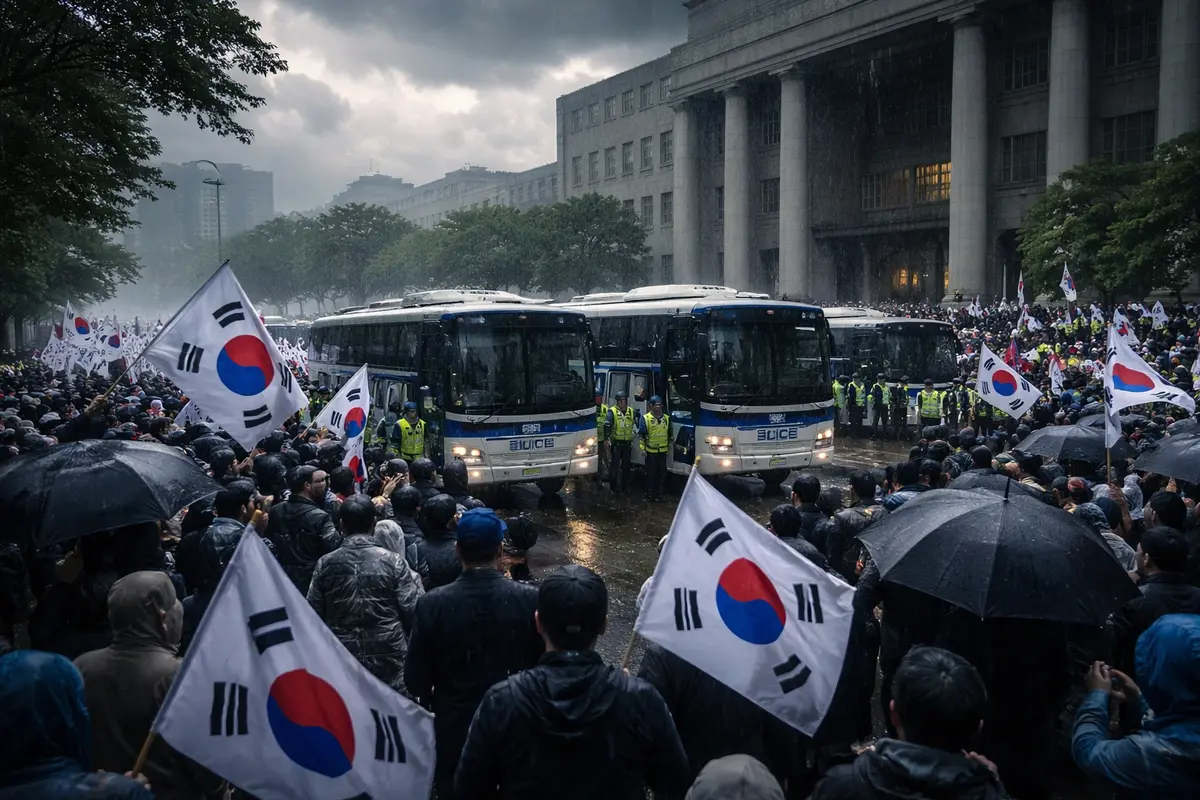
The sentencing exposed sharp political divisions. Thousands of Yoon supporters gathered outside the court. Many carried banners reading “Yoon, again” and expressed grief after the verdict.
Anti-Yoon protesters also rallied. Some demanded the death penalty. Police deployed about 1,000 officers and formed security barriers around the court.
These scenes highlighted the emotional impact of the crisis. The martial law attempt had already polarized society. The sentencing reinforced those divisions.
Political Fallout After the Martial Law Attempt
The martial law order triggered months of instability. Yoon was impeached and removed from office. Investigations targeted senior officials linked to the plot.
Several key figures have already received prison sentences. Former prime minister Han Duck-soo was sentenced to 23 years. Former defence minister Kim Yong-hyun received a 30-year term for advising the martial law move.
Other officials, including former interior minister Lee Sang-min and intelligence commander Roh Sang-won, were also jailed. Judges described the event as an “insurrection from the top.”
Legal Arguments and Defence Strategy
Throughout the trial, Yoon defended his decision. He argued that the constitution allows presidents to declare martial law during national crises. He claimed the opposition blocked governance and threatened stability.
His legal team said the order aimed to protect freedom and sovereignty. They denied any plan to seize power permanently.
The court rejected this defence. Judges ruled that the situation did not meet constitutional standards for martial law. They said Yoon abused his authority and attempted to silence political opponents.
Impact on South Korean Democracy
South Korea’s democracy has faced past crises, but this case stands out. The attempted use of military force against elected lawmakers raised fears about democratic backsliding.
The court’s strong verdict sends a clear message about limits on executive power. It also shows the strength of institutions that resisted the attempt.
Lawmakers who entered the assembly despite military presence played a key role. Their vote to overturn martial law restored constitutional order within hours.
This event may shape future debates about presidential authority and emergency powers.
Role of the Opposition and Political Tensions
Political gridlock set the stage for the crisis. The opposition held a parliamentary majority, weakening Yoon’s ability to pass policies. This situation left him politically isolated.
Tensions rose over corruption allegations involving his wife. Public protests and declining approval ratings added pressure. These factors created a volatile political environment.
The ruling Democratic Party later won the presidential election after Yoon’s removal. Party leaders criticized the court for not imposing the death penalty, showing continued political friction.
Historical Context: Former Presidents in Prison
South Korea has a history of prosecuting former leaders. Several ex-presidents have faced corruption charges and prison sentences. Some were later pardoned after serving a few years.
This pattern raises questions about whether Yoon may receive a pardon in the future. Analysts note that political reconciliation often leads to clemency for former leaders.
Still, the severity of the martial law attempt may influence future decisions. Public opinion remains divided on whether forgiveness is appropriate.
Security Measures and Trial Atmosphere
Security around the sentencing was tight. Police buses formed barriers outside the court. Officers controlled crowds and prevented clashes between opposing groups.
Inside the courtroom, proceedings remained tense. The judge’s remarks emphasized the seriousness of the case. Observers described the atmosphere as historic and emotionally charged.
These security measures reflected fears of unrest and highlighted the trial’s national importance.
International Reactions and Global Significance
The case has drawn global attention. Many observers see it as a test of democratic resilience in Asia. Allies have expressed concern but also praised South Korea’s rule of law.
International media coverage focused on the peaceful reversal of martial law and the judicial response. The episode contrasts with situations in other countries where similar crises led to prolonged instability.
South Korea’s handling of the crisis may strengthen its reputation as a stable democracy despite internal tensions.
Remaining Trials and Legal Uncertainty
Yoon still faces additional trials linked to the martial law episode. He is already serving time for abuse of power and obstructing his own arrest. Appeals are likely, meaning the case could reach the Supreme Court.
Legal experts expect months of uncertainty before a final ruling. The appeal process may revisit evidence and legal arguments.
This ongoing legal battle keeps the issue in public focus and prolongs political debate.
Social and Economic Effects of the Crisis
Political instability can affect economic confidence. Markets often react to uncertainty in leadership. The martial law episode briefly raised concerns among investors and businesses.
Public trust in government also faced strain. Social divisions deepened as supporters and critics clashed in protests and debates.
Yet South Korea’s strong institutions helped limit long-term damage. The swift reversal of martial law reassured many citizens and international partners.
Lessons for Democratic Governance
The crisis offers lessons about democratic safeguards. Strong legislative powers helped block executive overreach. Independent courts ensured accountability.
Public engagement also played a role. Citizens and civil groups closely followed events, reinforcing democratic norms.
These factors show that democracy relies on both institutions and active civic participation.
What Comes Next for South Korea
South Korea now faces the challenge of healing political divisions. Dialogue and reform may help rebuild trust. Debates about emergency powers and constitutional safeguards are likely to continue.
The country’s political future will depend on leadership that can bridge divides and strengthen democratic values.
Yoon’s case will remain a reference point in discussions about power, law, and accountability.