Table of Contents
India’s charity story often focuses on wealthy donors and corporate foundations. Headlines usually highlight billionaires, major pledges, and large social programmes. A new report offers a different view. It shows that ordinary households form the real backbone of giving in India. The study estimates that Indian households donate about 540 billion rupees every year. This equals roughly six billion dollars in cash, goods, and volunteer work. The findings challenge the belief that organised institutions dominate charity. Instead, generosity appears woven into daily life across communities. This article explains the report, explores cultural drivers, and examines the wider impact of everyday giving in India.
The How India Gives 2025 Report
The findings come from the How India Gives 2025 report produced by the Centre for Social Impact and Philanthropy at Ashoka University. Researchers conducted more than 7,000 interviews across 20 states covering both urban and rural areas. They asked households about giving habits over a three-month period and then estimated annual totals. The analysis linked responses to national consumption data to build income profiles of donors. This approach allowed researchers to understand how giving relates to spending levels. The report paints a detailed picture of everyday generosity across India’s diverse population.
Household Giving: A Quiet Giant
The study estimates that around 68 percent of Indians give in some form. This includes cash donations, material support, and volunteer service. In-kind contributions make up the largest share at about 48 percent. Cash donations account for 44 percent, while volunteering stands at 30 percent. Much of the donated food and goods goes to community kitchens and relief efforts. Volunteers often serve at religious centres, social groups, and disaster relief programmes. These patterns show that charity is not limited to wealthier groups. Instead, giving occurs across income levels and social backgrounds.
Cultural Roots of Generosity
The report suggests that generosity in India is deeply cultural. Many respondents linked giving to moral duty and religious belief. Faith traditions across India encourage charity through practices such as almsgiving, community meals, and service. Researchers found that more than 90 percent of donors cited religious obligation as a key motivation. Giving also reflects social values of mutual support and community care. These norms create a culture where helping others feels natural rather than exceptional. The widespread nature of charity explains why participation remains high even among lower-income households.
The Role of Religious Institutions
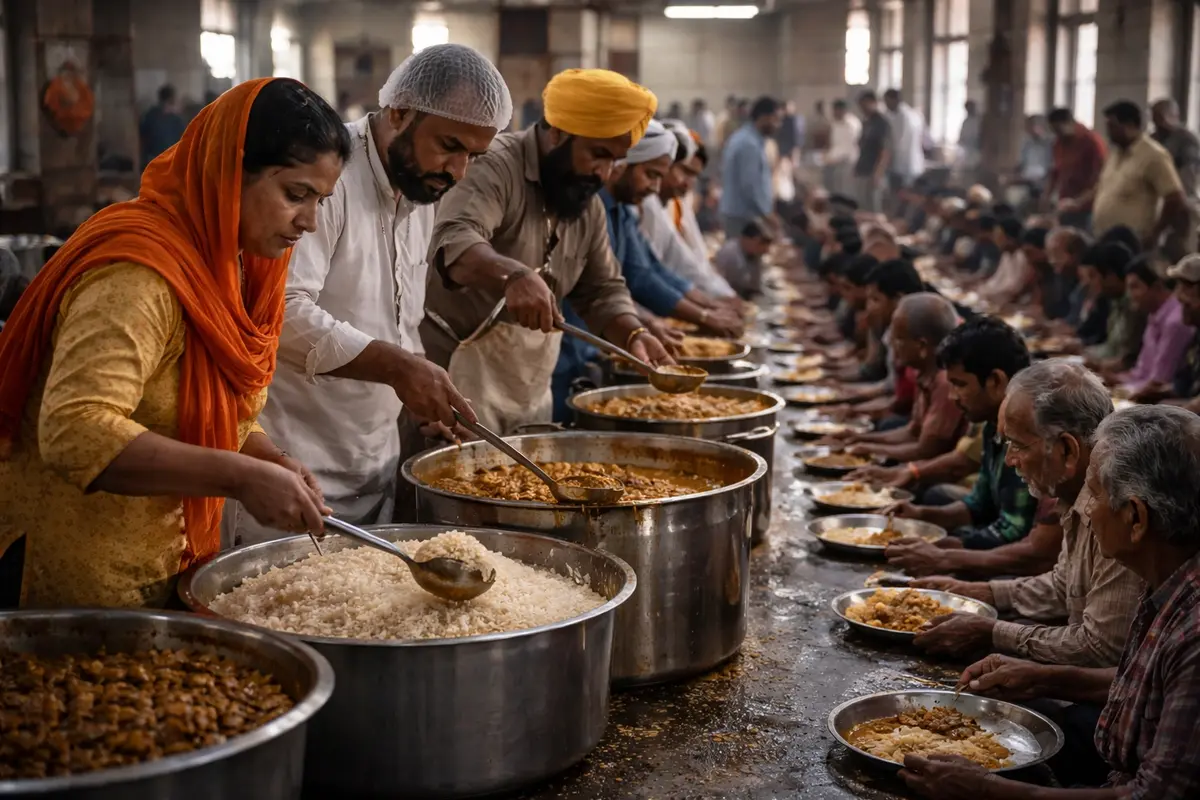
Religious organisations play a major role in India’s giving landscape. Around 40 to 45 percent of donations flow to temples, mosques, churches, and other faith-based institutions. Many religious centres run free kitchens, schools, and health services. Community meals, known as langars in Sikh tradition, depend heavily on food donations and volunteer labour. These initiatives feed thousands of people daily and serve as visible examples of collective generosity. In rural areas, religious institutions often act as the main channel for charity. Their presence strengthens local trust and encourages direct participation in giving.
Informal Giving and Direct Support
A large portion of Indian charity takes place outside formal organisations. Many households give directly to individuals in need, such as beggars, neighbours, or relatives facing hardship. This direct support reflects close social ties and community responsibility. Researchers describe this as everyday giving, which includes personal help as well as donations to non-profits. Informal giving often occurs through face-to-face requests rather than digital campaigns. This local and relational nature distinguishes India’s charity culture from many developed economies where giving is more institutionalised.
Income and Participation Patterns
The report shows that generosity is not limited to affluent households. Even families with modest consumption levels report regular giving. Among households spending 4,000 to 5,000 rupees per month, about half still contribute in some form. As income rises, participation increases to around 70 to 80 percent. This pattern indicates that charity is seen as a shared social duty rather than a luxury. Education also correlates with higher participation, with graduates and postgraduates reporting greater engagement in giving. These findings highlight the broad reach of India’s philanthropic culture.
Gender Differences in Giving
Gender patterns in giving appear subtle but meaningful. Male-headed households tend to contribute slightly more to religious causes. Female-headed households show a marginal preference for supporting destitute individuals directly. These differences may reflect varying social roles and priorities within families. Despite these variations, both groups demonstrate strong commitment to charity. The overall picture remains one of widespread participation across demographic categories.
The Economic Impact of Everyday Giving
Everyday giving represents about 15 percent of total charitable contributions in India. Yet it accounts for nearly one-third of private donations to organised social organisations. This means small individual contributions collectively create significant social impact. Community kitchens, education programmes, and health initiatives often rely on these modest donations. The scale of participation ensures steady support even when institutional funding fluctuates. Researchers argue that this grassroots philanthropy strengthens social resilience and local welfare systems.
Comparing India with Global Giving Trends
India’s charity culture differs from patterns seen in many developed economies. In countries like the United States and the United Kingdom, giving often flows through registered non-profits. Tax incentives and structured fundraising campaigns encourage formal donations. In India and other parts of the Global South, informal giving remains dominant. Person-to-person support and religious donations exceed institutional contributions. This difference highlights how social context shapes philanthropic behaviour. It also suggests that global comparisons must account for informal generosity that may not appear in official data.
The Influence of Economic Growth
India’s rapid economic growth could shape future giving patterns. Rising household consumption often leads to increased charitable participation. As incomes grow, families may have more capacity to donate money or volunteer time. Researchers expect everyday giving to expand alongside economic development. Digital payment systems and online fundraising may also transform how people give. Yet the cultural roots of generosity suggest that traditional forms of charity will remain important.
The Role of Free Kitchens and Community Service
Free kitchens serve as a powerful example of everyday giving in action. These initiatives rely on donated food, volunteer labour, and local support. Some kitchens feed tens of thousands of people daily without discrimination. Volunteers prepare meals, serve guests, and manage operations collectively. These spaces reflect the spirit of community service that defines Indian philanthropy. They also highlight how small contributions can create large social benefits.
Challenges in Measuring Informal Giving
One challenge in studying Indian philanthropy is capturing informal donations. Many acts of generosity occur privately or without documentation. Researchers rely on surveys and self-reported data to estimate totals. This means actual giving may be even higher than reported figures. Informal giving also lacks tax records, making it harder to track through official statistics. Despite these challenges, the report provides valuable insight into the scale and nature of everyday generosity.
Policy Implications and Future Opportunities
The findings have implications for policymakers and non-profit organisations. Recognising the scale of household giving could shape funding strategies and outreach efforts. Non-profits may benefit from engaging local communities more directly rather than focusing only on large donors. Governments could also support volunteer networks and community initiatives that rely on grassroots contributions. Strengthening these systems could enhance social welfare and civic engagement.
Lessons from India’s Giving Culture
India’s charity culture offers lessons for other countries. It shows how generosity can thrive through social norms and community relationships. The emphasis on personal connection and moral duty encourages widespread participation. Small contributions, when combined, can create significant impact. This model highlights the power of collective action in addressing social challenges. It also demonstrates that philanthropy does not depend solely on wealth or institutions.