Table of Contents
Ramadan is one of the most important months for Muslims around the world. It is a time of fasting, prayer, charity, and reflection. In the United Kingdom, Ramadan has become a visible part of community life, especially in cities with large Muslim populations like London, Birmingham, Manchester, and Bradford.
The UK is home to more than three million Muslims. Every year, millions of people across the country fast from dawn until sunset during Ramadan. Mosques, homes, schools, and workplaces adjust to support those observing the holy month.
Ramadan in the UK combines religious tradition with modern city life. It shows how faith and community work together in a diverse society.
What Ramadan Means
Ramadan is the ninth month of the Islamic calendar. Muslims believe it is the month when the Quran was first revealed to Prophet Muhammad.
During Ramadan, adult Muslims fast daily. They do not eat or drink from sunrise until sunset. The fast begins with a pre-dawn meal called suhoor and ends with iftar, the evening meal.
Fasting is not only about food. It is also about patience, kindness, self-control, and helping others.
Muslims also spend more time praying and reading the Quran during this month.
Ramadan in British Cities
Ramadan is strongly felt in many UK cities.
In London, areas like East London and Whitechapel become lively at night. Restaurants stay open late, and mosques fill with worshippers.
Birmingham has one of the largest Muslim communities in the UK. During Ramadan, neighbourhoods like Sparkbrook and Small Heath become busy after sunset. Shops, bakeries, and food markets stay open late.
Manchester, Leicester, and Bradford also have strong Ramadan traditions.
Even in smaller towns, mosques organise community iftars and charity events.
Fasting During Long Summer Days
One unique challenge of Ramadan in the UK is the length of fasting hours.
Because the Islamic calendar follows the moon, Ramadan moves through the seasons. Some years it falls in winter, when fasting days are short. Other years it falls in summer, when fasting can last up to 18 hours.
Long fasting hours can be difficult for people working or studying. Still, many Muslims continue their daily routines while observing the fast.
Schools and employers in the UK are becoming more aware of Ramadan. Some allow flexible schedules or quiet spaces for prayer.
Iftar and Community Gatherings
Iftar is often the most social part of Ramadan.
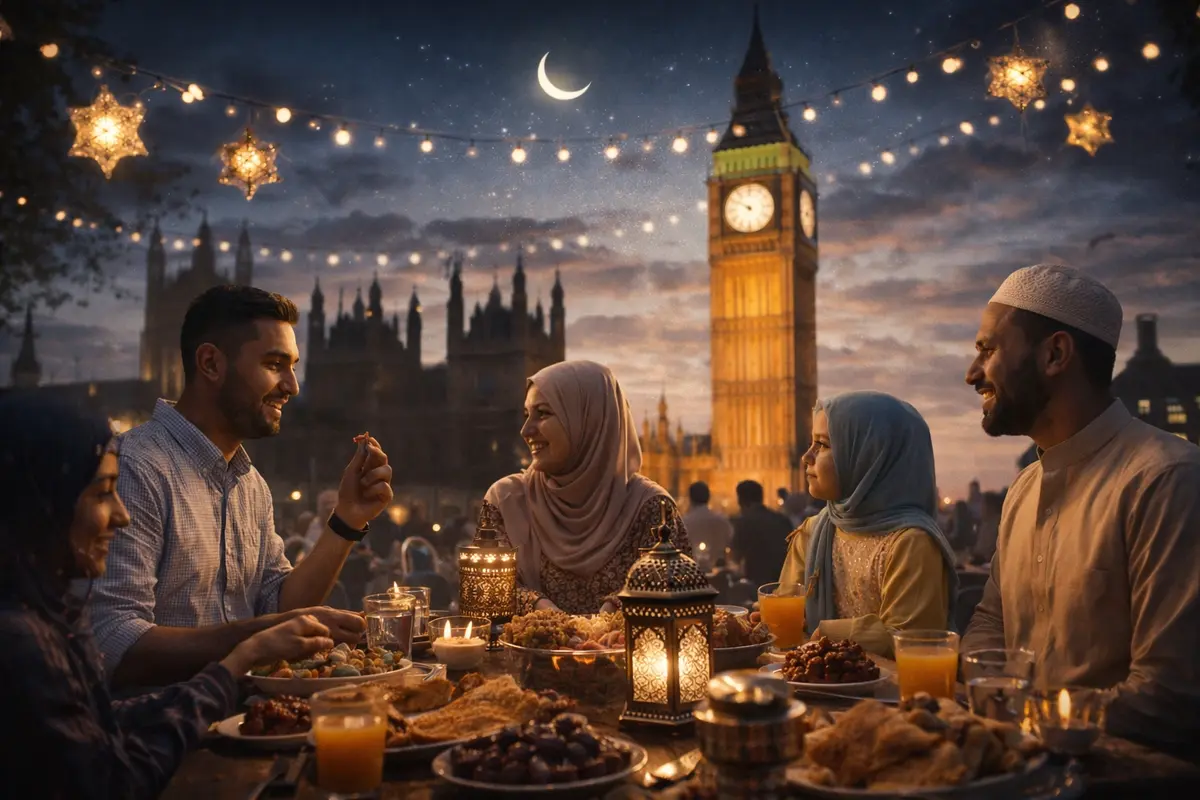
Families gather to break their fast together. Dates and water are usually eaten first, followed by a full meal.
Mosques across the UK host free community iftars. These events welcome people from all backgrounds.
Community centres, charities, and student groups also organise shared meals. These gatherings help reduce loneliness and strengthen community bonds.
In recent years, public Ramadan events have grown in popularity. Some cities now host Ramadan markets and evening food festivals.
Mosques During Ramadan
Mosques play a central role during Ramadan.
Special nightly prayers called Taraweeh take place after the evening prayer. Many mosques are full during these prayers.
Some worshippers attend every night. Others come on weekends or during the last ten days of Ramadan.
Mosques also organise charity drives, food banks, and support programs for people in need.
For many Muslims in the UK, Ramadan is the time they feel most connected to their mosque and community.
Charity and Giving
Charity is a key part of Ramadan.
Muslims are encouraged to give Zakat, which is a required form of charity. Many also give Sadaqah, which is voluntary charity.
UK charities often see a large increase in donations during Ramadan.
Food banks, refugee support groups, and homeless shelters receive extra support during this time.
This focus on helping others is one of the most meaningful parts of Ramadan for many people.
Ramadan in Schools and Workplaces
Ramadan is becoming more understood in British schools and workplaces.
Teachers often learn about Ramadan so they can support fasting students. Some schools adjust physical activity or exam schedules when possible.
Workplaces may allow flexible hours or remote work options.
Colleagues sometimes join iftar meals to show support. This helps build understanding between different cultures.
These small changes make Ramadan easier for many people.
Ramadan Nights in the UK
After sunset, Ramadan nights can feel special.
Restaurants serving Middle Eastern, South Asian, and Turkish food become busy. Dessert shops and tea cafes stay open late.
Many families stay awake longer than usual. The rhythm of daily life changes during Ramadan.
The final ten nights are especially important. Muslims believe these nights are a time of extra blessings and prayer.
Eid al-Fitr in the UK
Ramadan ends with the celebration of Eid al-Fitr.
On Eid morning, Muslims attend a special prayer. Many wear new clothes and visit family and friends.
Children often receive gifts or money.
In the UK, Eid celebrations are becoming more visible each year. Parks, community halls, and mosques host festivals and gatherings.
Cities like London and Birmingham often organise large Eid events open to everyone.
Eid marks the end of fasting and the start of celebration.
The Role of Diversity
The Muslim community in the UK is very diverse.
People come from South Asia, the Middle East, Africa, Turkey, and many other regions.
This diversity is reflected in Ramadan food, traditions, and languages.
One family’s iftar might include samosas and biryani. Another might serve soup, bread, and olives.
Despite these differences, Ramadan brings people together.
Ramadan and British Society
Ramadan is becoming a recognised part of British cultural life.
Many supermarkets now sell Ramadan foods. Restaurants create special iftar menus.
Some public buildings and landmarks display Ramadan lights.
Media coverage of Ramadan has also increased. This helps more people understand the meaning of the month.
Ramadan shows how religious traditions can exist within a modern, multicultural society.