Table of Contents
Why This Matters and What It Means for Roads
In 2026, the UK government announced a major change in how pavement parking will be handled across England. Local councils will soon receive new legal powers to fine drivers who park on pavements and block pedestrian access. The aim is simple. Keep pavements clear, safe, and usable for everyone.
Pavement parking has caused problems for years. Cars parked on footpaths force people into the road. This puts lives at risk. The new rules are designed to fix this long-standing issue and give councils real tools to act.
This article explains what the new powers mean, why they matter, and how they will affect drivers, pedestrians, and local communities.
What Is Pavement Parking?
Pavement parking happens when a vehicle is parked on a footpath instead of the road. Pavements exist for people, not cars.
In London and Scotland, pavement parking is already banned in most cases. Outside these areas, the rules have been weaker. Many councils could only restrict pavement parking on specific streets. This required long approval steps and extra signs.
Because of this, pavement parking became common in many towns and cities. Complaints increased, but councils had limited power to act.
The new rules change that.
What the Government Has Announced
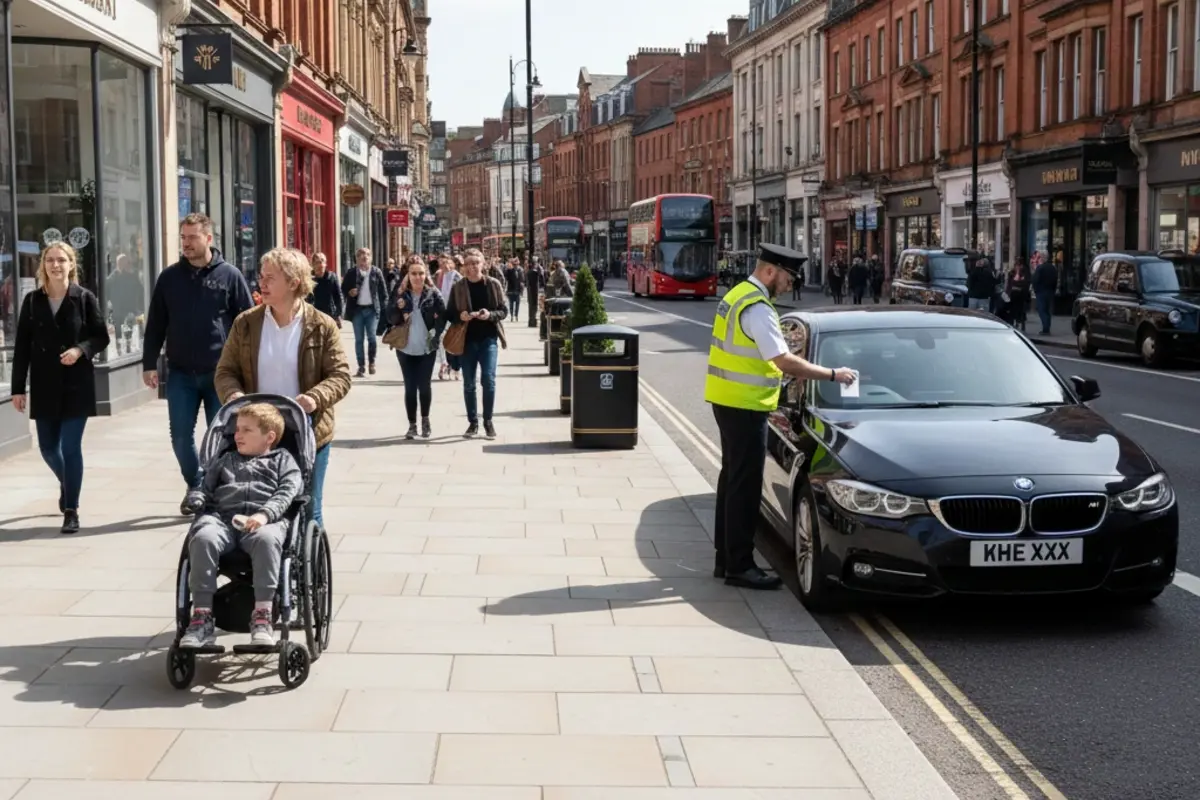
The government confirmed that councils across England will receive expanded enforcement powers later this year. These powers will allow councils to fine drivers who cause unnecessary obstruction by parking on pavements.
The rules will be enforced by council officers, not police. This makes enforcement faster and more consistent.
New guidance will explain how councils should apply the rules fairly. The focus will be on safety, access, and common sense enforcement.
The key point is this:
Pavement parking that blocks people will no longer be ignored.
Why Pavement Parking Is a Serious Problem
Pavement parking is not just annoying. It is dangerous.
When pavements are blocked, people are forced into traffic. This is especially risky for children and older adults.
People using wheelchairs or mobility aids often cannot pass at all. Parents pushing strollers face the same problem. Blind and partially sighted people are placed at serious risk when paths are blocked.
Blocked pavements also damage surfaces over time. Footpaths crack and sink under vehicle weight. This creates further hazards.
Local councils receive thousands of complaints every year about pavement parking. Until now, they lacked the power to respond properly.
How the New Powers Will Work
The new system is based on civil enforcement. This means councils can issue fines without involving police.
Key Features of the New Powers
- Councils can fine vehicles that block pavements
- No extra street signs are required
- Officers will use judgement based on guidance
- Enforcement focuses on safety and access
- Local needs will shape enforcement style
The term “unnecessary obstruction” is central. Parking that prevents people from using the pavement safely may result in a fine.
In some narrow streets, limited pavement parking may still be allowed if access remains clear. Councils will decide based on local conditions.
Guidance for Fair Enforcement
The government will publish official guidance to help councils enforce the rules properly.
This guidance will cover:
- When fines should be issued
- When warnings may be more suitable
- How to judge obstruction
- How to handle delivery vehicles
- How to consider emergency access
The goal is balance. Councils are expected to protect pedestrians without punishing drivers unfairly.
Who Benefits Most from the New Rules
Pedestrians
Clear pavements mean safer walking and less stress.
Wheelchair Users
Unblocked footpaths allow independent movement and dignity.
Parents With Strollers
Parents no longer need to step into traffic to pass parked cars.
Blind and Partially Sighted People
Clear pavements reduce serious injury risks.
Older Adults
Wider, safer paths support mobility and confidence.
These changes improve daily life for millions of people.
What Drivers Need to Know
Drivers must adjust their parking habits.
Important points to remember:
- Pavement parking may now result in fines
- Signs are not required for enforcement
- Blocking access is the main issue
- Local rules may vary by area
- Warning notices may be used at first
Drivers should always ask one question before parking:
Can people pass safely on the pavement?
If the answer is no, parking there is risky.
Delivery Vehicles and Exemptions
Delivery drivers raised concerns during consultation. Many rely on short stops to deliver goods.
Some councils may allow short exemptions for deliveries. Others may limit this based on location and time.
Emergency access is also a key factor. In narrow streets, councils may allow limited pavement parking to keep roads open for emergency vehicles.
These decisions will be made locally.
Concerns and Criticism
Not everyone supports the approach fully.
Some critics say enforcement may vary too much between councils. This could confuse drivers who travel between areas.
Others believe a national ban would have been clearer and fairer.
Walking groups welcomed the change but said it does not go far enough. They want consistent rules across England.
Councils also warned they need funding and staff to enforce the rules properly.
Why a National Ban Was Not Introduced
A full national ban would require primary legislation. That takes more time and political agreement.
The government chose a faster option. Giving councils powers now allows action without waiting years.
Officials say wider national rules may still come later.
How This Change Will Affect Communities
Clear pavements improve quality of life.
People walk more when streets feel safe. This supports local shops and healthier lifestyles.
Children can walk to school more safely. Older residents stay active longer.
Clear paths also improve street appearance and reduce damage costs.
What Enforcement Might Look Like
Early enforcement may focus on:
- School areas
- Busy shopping streets
- Narrow pavements
- High complaint zones
Some councils may start with warnings. Others may fine immediately in serious cases.
Public education campaigns are also expected.
Frequently Asked Questions
When do the new powers start?
Later this year after legal approval.
Will every council use them?
Councils decide based on local needs.
Is pavement parking fully banned?
No, but blocking pavements can now be fined.
Will signs be installed?
No additional signs are required.
Who issues fines?
Council enforcement officers.
What This Means Going Forward
This change marks a shift in transport priorities. Pedestrians are being placed first.
Drivers will need to be more careful. Councils will need to be fair and consistent.
Clear pavements mean safer streets. The new powers aim to make that the norm, not the exception.