Table of Contents
A major travel crisis has unfolded across the Middle East. Many foreign citizens remain stranded. Among them are thousands of British nationals. The United Kingdom has now organised its first chartered evacuation flight.
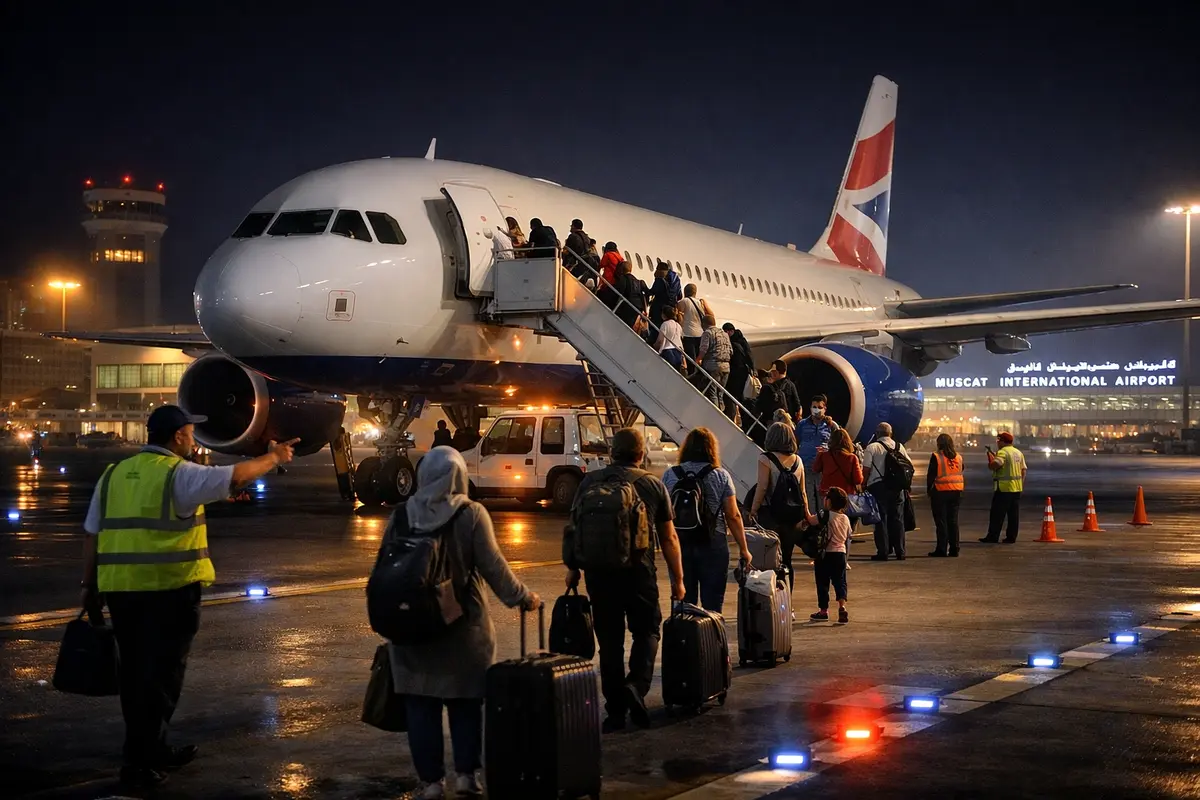
The flight is set to leave Muscat International Airport in Oman. It will carry vulnerable British citizens back to the UK. This step comes after missile and drone attacks across the region caused mass flight disruptions.
The conflict between Iran, Israel, and the United States has raised security concerns. Airspace closures and airline suspensions have left many travellers unable to return home. Governments across the world are now trying to bring their citizens back safely.
This article explains the full situation. It covers the evacuation flight, the reason for travel disruption, the role of the UK government, and what may happen next.
The Middle East Travel Crisis
The current crisis began after military strikes between Iran and a US-Israel alliance. Iran responded with missile and drone attacks across the region.
These attacks forced many airports to shut down for safety reasons. Flights across the Gulf region were cancelled or delayed. Airlines stopped operating from several major airports.
Travellers suddenly found themselves stranded in countries such as the United Arab Emirates, Qatar, Bahrain, and Kuwait.
The situation escalated quickly. Governments warned their citizens to avoid non-essential travel.
Travel experts say the scale of disruption is huge. Some analysts compare it to the travel shutdown during the Covid-19 pandemic.
For thousands of people, the crisis created urgent problems. Many had no way to return home. This forced governments to organise emergency evacuation plans.
UK Government Response to the Crisis
The British government acted after many UK nationals reported travel problems. The Foreign Office began tracking citizens in the region.
More than 130,000 British nationals registered for assistance through official channels.
Officials quickly began planning charter flights. These flights aim to bring citizens back to the United Kingdom.
The first of these flights will depart from Muscat, Oman. It is scheduled to leave at 23:00 local time (19:00 GMT).
The UK government confirmed that the most vulnerable passengers will receive priority seats.
These include families with young children, elderly travellers, and people with health conditions.
The goal is to ensure those in greatest need leave first.
Why Oman Was Chosen for the Evacuation Flight
Oman has become a key evacuation hub in the crisis.
First, Oman maintains stable relations with many countries in the region. It often acts as a neutral diplomatic partner.
Second, Muscat International Airport has remained open while other airports faced restrictions.
Third, Oman has strong flight connections to Europe.
British nationals in nearby countries were advised to travel to Oman if possible. Many travellers from Dubai and other Gulf cities have already moved to Muscat in hopes of getting a seat on the evacuation flight.
Demand for seats is extremely high. Officials warn that the first aircraft will not be enough for everyone who wants to leave.
Growing Demand for Evacuation Flights
The number of British citizens seeking evacuation is large. Over 130,000 people have registered interest in leaving the region.
This number includes tourists, business travellers, and residents living in Gulf countries.
Many flights were cancelled without warning. Others remain grounded due to airspace restrictions.
Commercial airlines are slowly trying to restore routes. However, safety concerns still limit operations.
Because of this, charter flights organised by governments are now one of the few reliable options for evacuation.
The British government says it is working with airlines to add more flights in the coming days.
Still, demand may remain far higher than available seats.
Military Action and Security Concerns
The conflict has created serious security concerns across the region.
Iran launched missile and drone attacks targeting several locations. Some attacks were aimed at military targets linked to Western forces.
One Iranian drone reportedly struck near the British military base at Akrotiri in Cyprus.
This raised alarm within the UK government.
To strengthen defence in the area, the Royal Navy destroyer HMS Dragon is expected to deploy to the Mediterranean.
The ship will help protect British military assets and support regional security operations.
Military officials say the move is precautionary. It aims to ensure the safety of British bases and citizens during the conflict.
Travel Disruption Across the Gulf Region
The Gulf region is one of the world’s busiest air travel hubs.
Cities like Dubai, Doha, and Abu Dhabi connect passengers between Europe, Asia, and Africa.
When the conflict began, airlines quickly suspended many flights. Some aircraft already in the air were forced to reroute.
Airspace closures created chaos for airlines and passengers.
Many travellers were stuck at airports for hours or even days. Others had to find new routes through different countries.
Airlines are now reviewing safety conditions before resuming flights.
Until the situation stabilises, disruption may continue.
Advice from the Foreign Office
The UK Foreign Office has issued travel warnings for several countries in the Gulf region.
Citizens are advised to avoid all but essential travel to:
- United Arab Emirates
- Bahrain
- Kuwait
- Qatar
Officials say the situation can change quickly. Travellers should follow government updates closely.
British nationals in the region are also advised to register their details with the Foreign Office. This helps officials contact them if evacuation flights become available.
People are encouraged to keep travel documents ready and monitor flight announcements.
Support for Stranded Travellers
Many travellers are facing stress and uncertainty.
Hotels in some cities have seen an increase in extended stays. Airlines and travel companies are trying to assist passengers with rebooking options.
British embassies across the region are also providing help.
Embassy staff are answering calls, sharing travel updates, and guiding citizens to evacuation routes.
Still, officials warn that the process may take time due to the large number of people seeking help.
Key Information About the Evacuation Flight
| Topic | Details |
|---|---|
| Flight Type | Chartered evacuation flight |
| Departure Airport | Muscat International Airport, Oman |
| Departure Time | 23:00 local time |
| Destination | United Kingdom |
| Priority Passengers | Vulnerable citizens, families, elderly travellers |
| Registered UK Nationals | Over 130,000 |
| Reason for Evacuation | Conflict, missile attacks, airspace disruption |
Global Impact on Travel
The crisis is affecting travellers beyond the Middle East.
Flights between Europe and Asia often pass through Gulf airspace. When that airspace closes, airlines must take longer routes.
This increases fuel costs and flight times.
Airlines may also face delays and schedule changes.
Travel experts warn that global travel networks can quickly feel the impact of regional conflicts.
For now, airlines and governments are closely monitoring the situation.
Possible Next Steps for the UK
The UK government may organise more evacuation flights if needed.
Officials are already working with airlines to increase capacity.
More charter flights could depart from Oman or other nearby countries.
Military aircraft may also assist if the crisis worsens.
The government says protecting British citizens abroad remains a top priority.
What Travellers Should Do Now
British nationals still in the region should take several steps.
First, register with the Foreign Office if they have not already done so.
Second, monitor travel updates from airlines and local authorities.
Third, prepare travel documents in case a flight becomes available.
Finally, stay informed through official government channels.
Staying ready will help travellers act quickly if evacuation opportunities appear.