Table of Contents
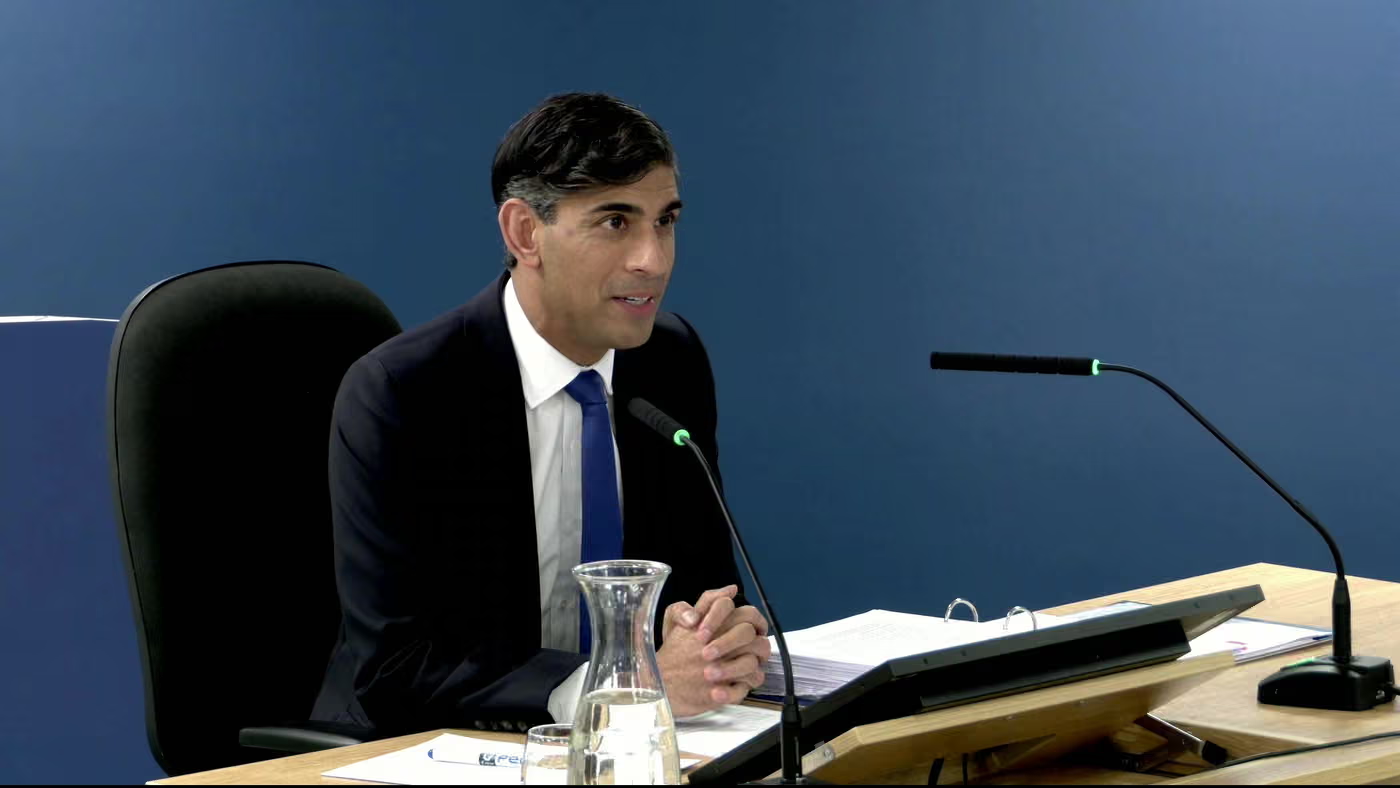
Rishi Sunak appeared before the UK Covid-19 Inquiry today, answering questions about the government’s economic response during the pandemic.
Millions of jobs, businesses, and families were affected, and the inquiry seeks clarity on the decisions made at the highest level.
The hearing is part of Module 9, focused on the economic response. It took place at Dorland House in central London.
Why Today’s Hearing Matters
The pandemic caused one of the deepest economic shocks in modern UK history.
Businesses closed overnight. Millions lost jobs. Household incomes fell sharply.
The inquiry aims to evaluate what worked, what failed, and how the UK can improve its preparedness for future crises. Sunak’s testimony is central to this effort.
Sunak’s Opening Statement
Sunak confirmed he became Chancellor on 13 February 2020, just weeks before the first lockdown.
He offered condolences to families who lost loved ones during the pandemic and emphasized the inquiry’s importance for improving future crisis preparedness.
Sunak noted that he was new to senior government roles and that events moved faster than anyone could anticipate.
Acknowledging the Economic Shock
Sunak told the inquiry:
Officials knew there was going to be an economic shock, but they believed it would be temporary.
Early in the crisis, the government expected disruption to last a few weeks or months.
The main goal was to protect jobs, incomes, and the wider economy from permanent damage.
Speed Was Paramount
Sunak emphasized that quick action was essential.
Millions faced immediate income loss, and delays could have had lasting consequences.
He described the economic impact as “extraordinary” and highlighted that every decision was made under extreme time pressure.
Becoming Chancellor During a Crisis
Sunak admitted that his appointment as chancellor came as a surprise.
He had only been chief secretary to the Treasury since July 2019.
His first task was preparing a budget within weeks.
He later described this as “one of the easier things” compared with managing the unfolding pandemic.
No Playbook for a Pandemic
Sunak explained there was no pre-existing plan for a crisis like this:
- No toolkit for pandemics
- Uncertainty about public behavior
- Unknown economic impacts of lockdowns
He stated:
There was not a playbook you could pull off the shelf.
Decisions were made with incomplete information and under extreme uncertainty.
The Economic Collapse of 2020
The first national lockdown caused a steep drop in GDP.
Many sectors, including hospitality, travel, and nightlife, shut down almost immediately.
Millions of workers faced potential job losses in days.
The government implemented large-scale support programs to mitigate the crisis.
Furlough Scheme (Coronavirus Job Retention Scheme)
The furlough scheme became the cornerstone of the economic response.
It subsidized wages for employees unable to work.
Key facts:
- Covered about 11.7 million jobs from March 2020 to September 2021
- Cost roughly £70 billion
- Estimated to have directly preserved 4 million jobs
Sunak defended the scheme as essential for maintaining employment and preventing long-term damage.
Total Government Spending on Covid-19 Support
The Treasury estimates total Covid support spending reached £373 billion.
This included:
- Furlough scheme
- Support for self-employed workers
- Business loans
- Universal credit and tax credit uplifts
The scale of intervention was unprecedented in peacetime.
Eat Out to Help Out Controversy
Sunak faced renewed questions about the Eat Out to Help Out scheme.
- Launched summer 2020
- Offered diners £10 discounts
- Cost £850 million
Sunak maintains it saved jobs in hospitality.
However, studies suggest it may have contributed to an 8%-17% rise in Covid cases, with short-term economic benefits.
Long Covid and Economic Impact
The inquiry also addressed the economic impact of Long Covid.
Long Covid reduces productivity and income for affected workers.
Early support systems were limited, raising questions about government preparedness.
Support for Devolved Administrations
Sunak will also face questions regarding funding for:
- Scotland
- Wales
- Northern Ireland
Each nation faced unique economic pressures.
The inquiry seeks clarity on funding decisions and coordination.
The Human Cost
Between March 2020 and May 2023, nearly 227,000 deaths in the UK listed Covid as a cause.
Bereaved families continue to seek accountability and honesty.
The inquiry forms a critical part of this process.
Cost and Timeline of the Inquiry
The Covid-19 Inquiry began in 2022 and is expected to cost over £200 million.
Its final report is not expected until 2027.
While critics question the pace, the inquiry aims to provide thorough, lasting lessons for future crises.
What the Inquiry Hopes to Learn
The inquiry reviews decisions on:
- Economic support and planning
- Health measures and vaccines
- Care homes and vulnerable populations
- Schools and children
- Public communication
The goal is not punishment, but learning. The UK aims to be better prepared next time.
Summary Table: Key Facts
| Topic | Details |
|---|---|
| Hearing Date | 15 December 2025 |
| Witness | Rishi Sunak |
| Role During Pandemic | Chancellor of the Exchequer |
| Inquiry Module | Economic Response (Module 9) |
| Furlough Cost | £70 billion |
| Jobs Covered | 11.7 million |
| Total Covid Spending | £373 billion |
| Eat Out Scheme Cost | £850 million |
| UK Covid Deaths | ~227,000 |
| Final Report Due | Around 2027 |
Public Reaction
Public opinion is mixed:
- Some praise the fast action that saved jobs
- Others feel health risks were underestimated
- Bereaved families demand clearer answers
The inquiry continues to weigh these perspectives.
Next Steps
Sunak will face further questioning today, continuing until late afternoon.
Other witnesses will follow, providing more evidence.
The inquiry remains ongoing, with important findings still to emerge.
Conclusion
Rishi Sunak’s appearance highlights the scale and urgency of decisions during the pandemic.
He emphasizes speed, temporary shocks, and lack of preparation.
The inquiry will judge the effectiveness of these decisions and shape future UK crisis responses.